Blood Flow Restriction Training: What BFR Is, How It Works, and Is It Safe?
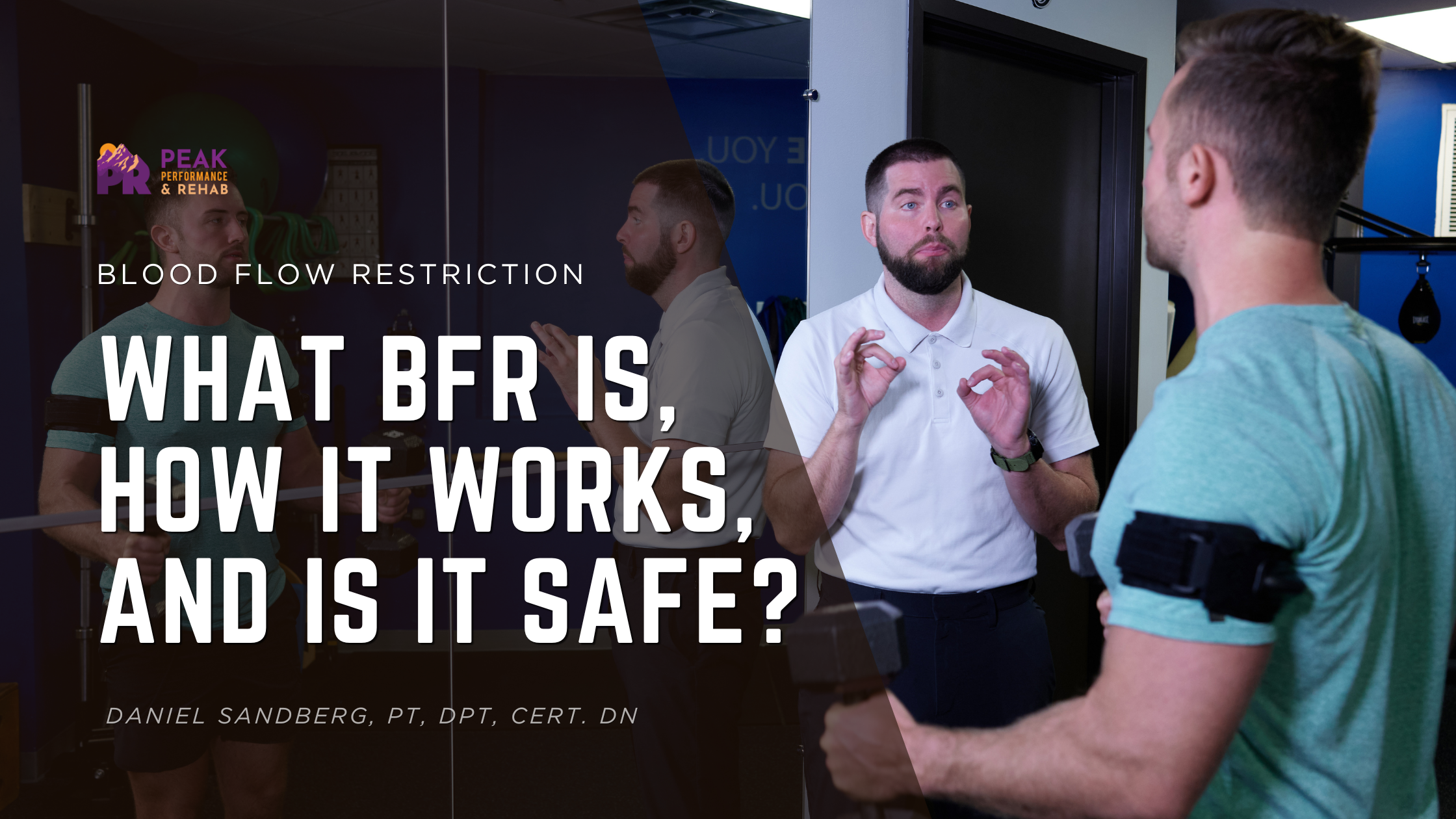
BFR Training: Why You Should "Occlude" Your Way to Better Recovery
If you’ve spent any time in a modern rehab clinic or scrolling through high-level athletic training feeds, you’ve likely seen someone strapped into what looks like a heavy-duty blood pressure cuff while lifting suspiciously light weights.
It’s called Blood Flow Restriction (BFR) training, and while "restricting blood flow" sounds like something you’d want to avoid, the science tells a different story. In fact, for many of our patients, it is the most efficient way to bridge the gap between injury and high-level performance.
What is BFR, and How Does it Work?
Traditional strength training guidelines are pretty rigid: if you want to grow muscle and get stronger, you generally need to lift loads greater than 65% of your one-rep max (1-RM) for several months.
But what happens if you just had surgery? Or your joints are too flared up to handle a heavy barbell?
BFR solves this by using a specialized, medical-grade tourniquet to briefly and intermittently restrict venous blood flow (the blood leaving the limb) while still allowing arterial flow (the blood entering the limb). This creates a unique physiological environment:
Metabolic Stress: By slowing the blood's exit, we cause metabolites like lactate to pool in the muscle. This mimics the "burn" of a high-intensity workout without the actual heavy load.
Muscle Fiber "Deception": Normally, your big, powerful fast-twitch muscle fibers only kick in for heavy weights. In a BFR-induced hypoxic (low oxygen) environment, those slow-twitch fibers fatigue almost instantly, forcing the fast-twitch fibers to punch the clock and get to work—even if you’re only lifting 30% of your max.
Hormonal Surge: The metabolic buildup triggers a systemic response, increasing Growth Hormone and Insulin-like Growth Factor, which are essential for tissue repair and growth.
The Gold Standard for Safety and Efficacy
The effectiveness of BFR isn't just "gym science"—it is heavily backed by the leading authorities in sports medicine. In their official position stand on progression models in resistance training, the American College of Sports Medicine (ACSM) acknowledges the unique role BFR plays in achieving hypertrophy when heavy loading isn't an option.
As noted in a comprehensive review published in Frontiers in Physiology:
"BFR training in combination with low-load resistance exercise can produce similar degrees of muscle hypertrophy and strength gains as compared to traditional high-load resistance training."
— Source: Patterson, S. D., et al. (2019). Blood Flow Restriction Exercise: Considerations of Methodology, Application, and Safety. Frontiers in Physiology.
Who is BFR For? (Hint: Almost Everyone)
The beauty of BFR is that it scales to the individual. It isn't just for elite athletes; it’s for anyone who needs the benefits of heavy lifting without the joint stress.
The Post-Op Warrior: After surgery, a limb enters a "period of disuse" where protein production can drop by 30%. BFR combats this atrophy by stimulating muscle protein synthesis by up to 56% within hours of training.
The "Grumbling Joint" Athlete: If you have chronic pain or arthritis that makes heavy loading impossible, BFR allows you to gain strength and muscle size using very light, tolerable weights.
The Aging Population: Sarcopenia (age-related muscle loss) is a major threat to independence. BFR provides a safe way for older adults to maintain muscle mass without overtaxing their cardiovascular system or joints.
"Is This Safe?"
We get this question a lot. The short answer: Yes, when done correctly. At Peak Performance and Rehab, we don't just "strap a band on." We use a Personalized BFR system that utilizes an internal Doppler to measure exactly how much pressure is needed for your specific limb. This is the gold standard for safety, ensuring we use the minimum pressure necessary to get the job done.
While minor side effects like temporary bruising or dull discomfort can occur in a small percentage of cases, research actually shows that BFR can decrease the likelihood of developing blood clots by increasing anti-clotting factors.
Note: There are certain contraindications, such as a history of DVT, pregnancy, or severe hypertension. This is why professional screening is non-negotiable.
The Takeaway
BFR training is a game-changer because it breaks the "heavy weight or nothing" mentality. It allows us to keep you moving, keep you strong, and accelerate your recovery when your body isn't ready for the "heavy" stuff yet.
Ready to see if BFR is the missing piece of your recovery? Reach out to us at Peak Performance and Rehab to get your personalized pressure profile and start training smarter, not harder.